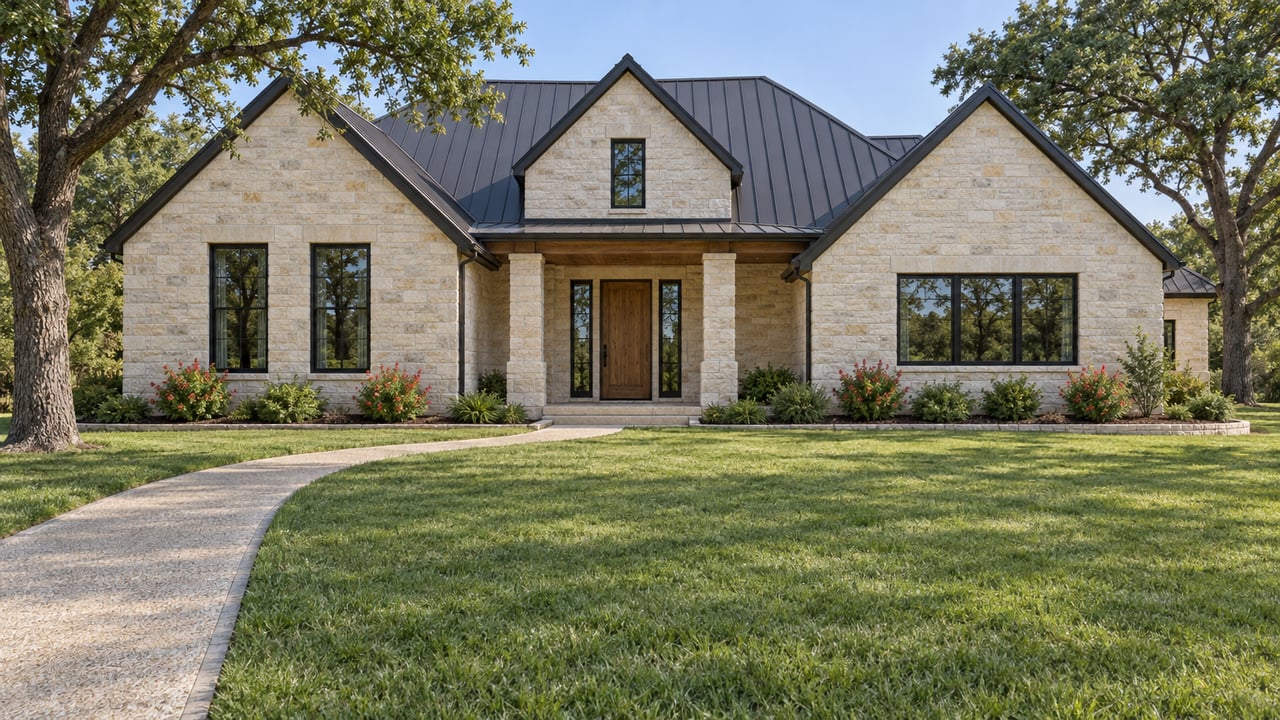
In Westlake, the Town Tax Is the Smallest Line on the Bill. So What Sets the Rest?
October 15, 2026
October 15, 2026
Every property in Westlake together is now appraised at $3.77 billion for the town's 2026-27 budget year. That's up $330 million, or 9.6 percent. Over the same period, the average taxable value of a Westlake homestead fell by $239,000, also 9.6 percent, to $2.25 million. Total appraised value went up and the typical homeowner's taxable value went down. The town's FY2027 proposed budget gives three reasons: an unchanged tax rate, market conditions, and protests. It estimates the average homeowner's annual town bill will be $442 lower.
That gap explains how taxes work in Westlake. The town sets a small rate and pays for most of its operations with sales tax. Most of what a Westlake homeowner pays goes to other taxing units, and the parts of the bill that change from one house to the next come from the school district line and from each home's own taxable value. If you're comparing Westlake with Southlake, Keller or Trophy Club, the town's rate is the least useful number to compare.
For the 2026-27 fiscal year, which began October 1, 2026, Westlake budgeted $20.075 million in sales tax revenue across all funds and $4.945 million in property tax. In the General Fund, which covers day-to-day operations, sales tax is budgeted at $15.075 million and property tax at $3.715 million. So for every dollar of property tax the town collects for operations, it expects about four dollars from sales tax.
Few Texas towns of this size have that mix, and Westlake doesn't have much retail. Town documents describe it as home to the Fidelity, Deloitte and Charles Schwab campuses. No public source we found breaks down how much of the town's sales tax comes from any one of them. Under the Texas Comptroller's rules, local sales tax generally follows the seller's place of business, and local use tax can follow where a taxable item is first stored, used or consumed. That's a general rule, not an explanation of where Westlake's revenue comes from.
The property tax rate shows what this revenue mix makes possible. On September 15, 2026, the Town Council adopted a rate of $0.185 per $100 of value, the same as last year. The budget says that rate is $0.021222 below the no-new-revenue rate. The no-new-revenue rate is the rate that would bring in the same property tax revenue from the same properties as the year before. Westlake's total property tax revenue still rises, by $626,754 or 13.34 percent, because $508,125 of it comes from new property added to the roll.
Each Westlake address is taxed by the town plus a school district, a county and, on the Tarrant County side, a hospital district and a college district. All of these taxing units adopted their 2026 rates between mid-August and late September.
| Taxing unit | 2026 rate per $100 | Adopted |
|---|---|---|
| Town of Westlake | $0.185 | Sept. 15 |
| Northwest ISD | $1.0638 | Aug. 24 |
| Carroll ISD | $0.9269 | Aug. 17 |
| Keller ISD | $1.052 or $1.0852, sources differ | Sept. 24 |
| Tarrant County | $0.186 | Sept. 15 |
| Tarrant County Hospital District, JPS | $0.159 | Sept. 15 |
| Tarrant County College | $0.120 | Sept. 10 |
| Denton County | $0.183394 | Sept. 22 |
A few notes on the table. Keller ISD's own meeting recap says trustees kept "the existing tax rate of $1.052 per $100 of value." Community Impact's report on the same September 24 vote gives $1.0852, made up of $0.7552 for operations and $0.3300 for debt service. Until the district's adopted resolution settles it, we show both. The JPS figure comes from the Fort Worth Report, which reported final approval on September 15. JPS's own posted notice calls the $0.159 figure the proposed rate.
Add up the Tarrant-side rates and the town's share stays small whichever school district applies. It's about 10.8 percent with Northwest ISD, about 11.7 percent with Carroll ISD, and between 10.7 and 10.9 percent with Keller ISD, depending on which figure is correct. These numbers compare rates only. Each taxing unit applies its own exemptions, so taxable value differs from one unit to the next and a real bill won't split exactly this way.
The Denton County part of Westlake is set up differently. Denton County says it has no county hospital district or community college taxing district, so an address there doesn't carry the JPS and TCC lines that Tarrant-side addresses do.
Every Westlake home pays the same town rate, but not the same school district rate. Look at the two school districts with clean adopted figures: Northwest ISD's rate is $0.1369 per $100 higher than Carroll ISD's. That works out to about $1,369 a year for every $1 million of school-taxable value, before exemptions. The town's rate change this year was zero.
So when two Westlake homes carry different tax estimates, the town usually isn't the reason. The difference comes from the school district line, the county line, and each home's own taxable value. School district boundaries are checked parcel by parcel, and the research behind this post didn't map them. Tarrant Appraisal District or Denton Central Appraisal District shows which taxing units apply to a specific property.
The second variable is the one from the opening: taxable value. The town's numbers show that a rising total appraisal doesn't automatically mean a higher taxable value for the average homestead. Between the full appraisal of $3.77 billion and the certified taxable value of $2.88 billion are the exemptions the town offers. The budget lists four:
The budget doesn't say how big the homestead exemption is or how much the sales tax reduction lowers the rate. Treat both as programs that exist, not as numbers you can plan around.
If sales tax pays for most of Westlake, the next question is how steady that sales tax is. The Comptroller's city allocation data shows big monthly swings. Westlake's July 2026 payment was down 35.72 percent from a year earlier, and its August payment was up 66.09 percent. Over a longer stretch the swings mostly cancel out. Calendar-year payments through October 2026 totaled $14,184,640.49, up 1.01 percent. The Comptroller also points out that these are payment months, not the months the sales happened.
The budget is more optimistic than that flat calendar-year trend. Its $20.075 million sales tax estimate is about 16.7 percent above the $17.2 million the town projected for the year that just ended. The two sets of numbers cover different periods, a fiscal year and a calendar year, so they don't contradict each other. They do explain why the town keeps building a cushion. The General Fund is budgeted to bring in $22.67 million, spend $14.88 million and add $7.79 million to its fund balance. The town says it has built reserves over the past three years to pay cash for some future capital projects and borrow less.
The property tax rate is the backstop. The town's FY2026 budget raised the rate from $0.16788 to $0.185, which it called the first rate increase since 2020. About 45 percent of the $9.38 million in debt issued in FY2025 for campus facilities and utility improvements was to be repaid through the debt service portion of that increase, and utility revenue covers the rest. This year the total stayed at $0.185, but the split changed. The share for operations went from $0.130000 to $0.142206, and the share for debt service went from $0.055000 to $0.042794. The town lists the cost pressures behind that shift: employee pay and health benefits, $1.1 million for utility and street maintenance, capital investment, and $4.6 million in Westlake Academy costs, including a $1.5 million direct operating transfer. The town reports $49.07 million in outstanding debt as of October 1, 2026, and names sales taxes, utility fees and property taxes as the sources that pay it.
In short, the town's rate was raised once in six years, when debt called for it, and the town is now saving cash so it doesn't have to raise it again for capital projects. How long $0.185 holds depends largely on sales tax receipts that move a lot from month to month.
Is Westlake's town property tax rate going up this year? No. The 2026 rate stays at $0.185 per $100, adopted September 15, 2026. The town's total property tax revenue still rises because new construction was added to the roll.
Why do online tax estimates for two Westlake homes look so different? Usually the school district and county lines differ, and so does each home's taxable value after exemptions. The town rate is the same for every Westlake property.
Do the corporate campuses lower my tax bill? The town's reliance on sales tax keeps its own rate low. No current public source shows how much of that sales tax comes from any particular company. Older incentive agreements in town records are historical and don't tell you what applies today.
At Diamond Realty Group, we can walk you through the taxing units listed for any Westlake home you're considering, explain how the town, school district and county lines add up, and help you compare those numbers with the other towns on your list before you make an offer. Contact Us when you're ready to go through a property line by line.
This article is general information, not legal, tax or financial advice. Consult a qualified professional about your situation.
Stay up to date on the latest real estate trends.
At Diamond Realty Group, we believe every client deserves honest guidance, personalized service, and a seamless real estate experience. Whether you're buying, selling, or investing, our team is committed to helping you move forward with confidence.
ADDRESS 16128 Hollyhill Ct Justin, TX 76247